
How I got here
I grew up surrounded by cameras and didn't care for any of them. It took a borrowed Leica, a second-hand Nikon and a lot of missed shots to change that.

Cameras I ignored
My father was an art director before his fine-art career, so our house always had cameras in it: a Nikon F401s film camera, a Fujifilm FinePix 4700 Zoom, a Nikon Coolpix P1 and a Canon Sure Shot Ace. I wasn't interested. The few times I picked up the Fuji or the Coolpix, I flattened the battery in an afternoon and got an earful for it.
My phones kept trying. A Sony Ericsson W810i, a Nokia N73, a Huawei Mate 8, an Oppo Reno 4 Pro: each had a better camera than the last, and I hardly used any of them.
Cameras I was handed
In 2023 I joined the marketing team at Stellar Education Group, a group of schools in Johor Bahru. Stellar's founders came from wedding photography and film. So the office was full of cameras: a Sony A7C with a 24–70mm GM II, a Leica Q, Canon 5D bodies of several generations, video cameras, and a shelf of pocket cameras: at least two Sony RX100s and at least three ZV-1s, plus a ZV-E10.
The school had a full-time photographer, but one person couldn't cover a whole group of schools, and there were always cameras sitting unused. So I was handed one to help. It was the Leica Q.
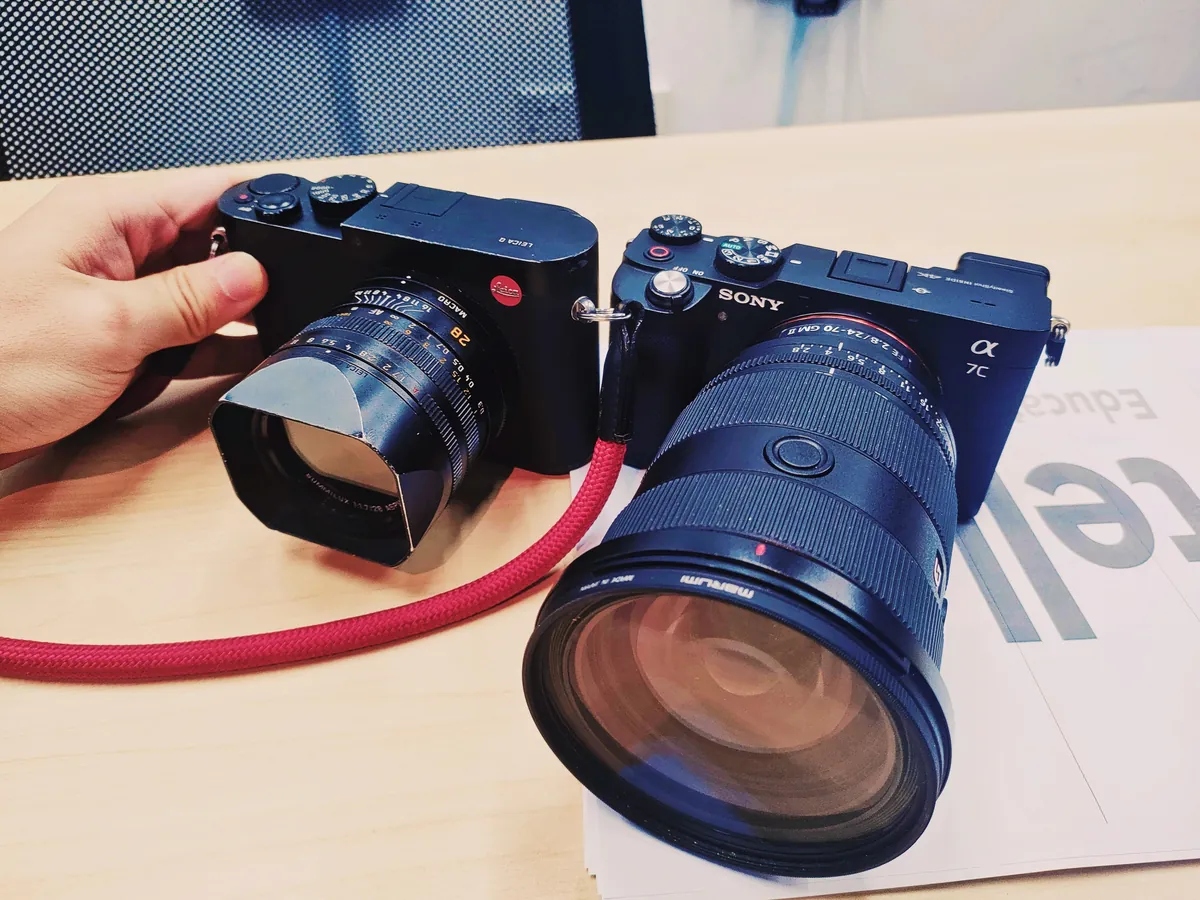
Oppo Reno 4 Pro
That was a generous thing to hand someone who didn't know what f/1.7 meant. The Leica did the hard parts for me: quick autofocus, a viewfinder that showed the picture before I took it, a 28mm lens with stabilisation built in. Some days I got the A7C or a Sony pocket camera instead. I had no idea how spoilt I was.
The school photographer taught me what he knew by doing it: framing, shooting over the shoulder, the rule of thirds. He was a practical shooter, not a teacher, and nobody explained the exposure triangle. To people who'd shot weddings for years, it was like explaining how to hold a spoon. Stellar told me to start building a portfolio anyway.
Cameras I bought
I wanted my own. The photographer said it had to be full frame. I didn't know what that meant either, but I found out that my father's old Nikon-mount lenses would fit a Nikon DSLR, which settled the brand.
I didn't know Nikon's line-up, so I went for the most megapixels at the lowest price: the D600. At the last minute I read about the dust and oil spots that plagued its sensor, and that its successor, the D610, came with a new shutter. I found a second-hand D610 body with about 11,000 shots on it for RM1,500, no lens.
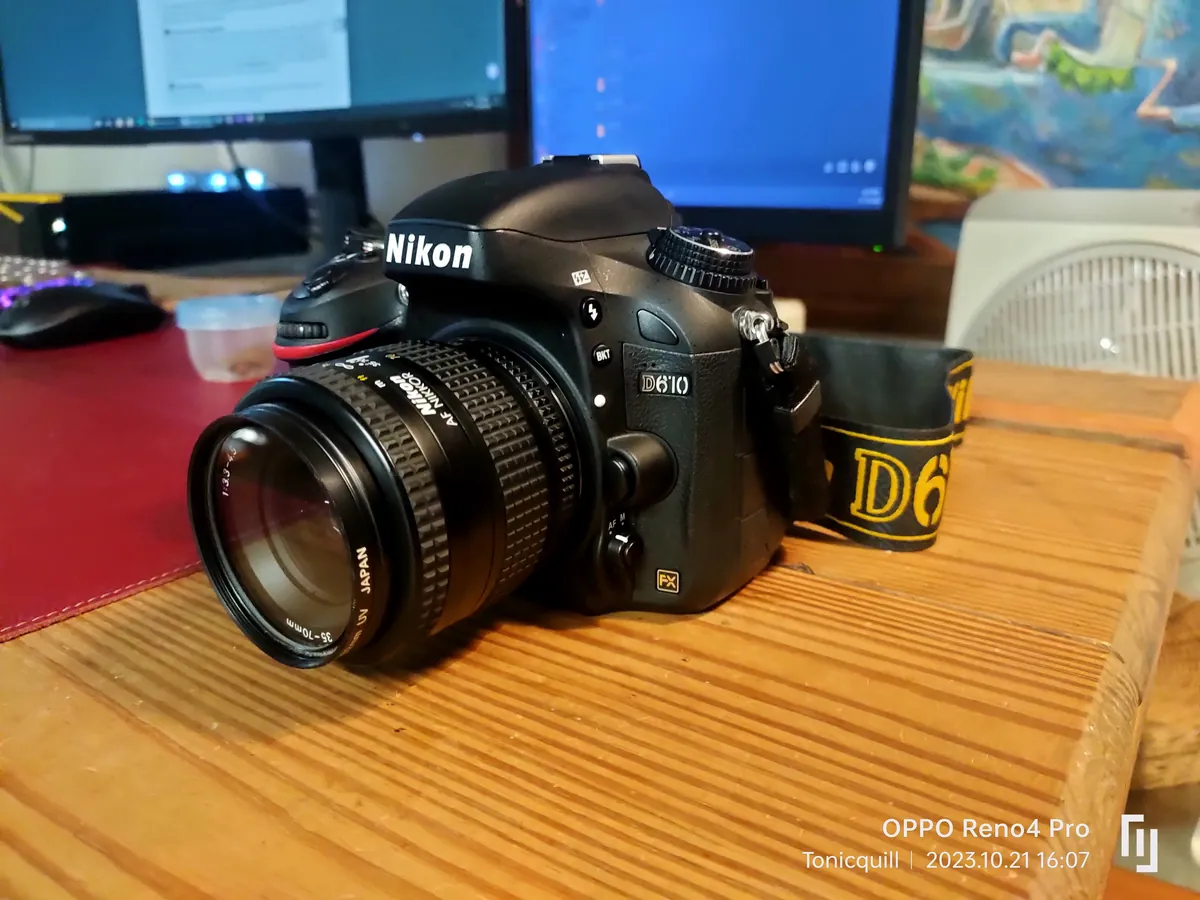
Oppo Reno 4 Pro · f/1.7 · 1/25 s · ISO 4016
Then everything got hard. The optical viewfinder showed me the scene, not the exposure, so I found my mistakes after the shot. There was no stabilisation, so slow shutter speeds meant shake. My father's two lenses, a Tamron 28–200mm and a 35–70mm f/3.3–4.5 kit lens, were slow zooms that wanted light I rarely had, and the ISO wouldn't stretch the way the Sony's did. I came close to giving up.
I didn't. I read, watched tutorials, practised, and taught myself what the numbers meant. The lenses came one at a time, all film-era and all second-hand: a 50mm f/1.4 because everyone recommends one, a 35–70mm f/2.8 and an 80–200mm f/2.8 (both push-pull), and a Tamron 17–35mm f/2.8–4.
Then a new problem: every lens swap cost me a moment, and the D610's autofocus couldn't catch everything. The answer was more bodies, not more lenses. I'd watched enough about the D200 and D700 to stop caring about megapixels, and I fell into the rabbit hole of old-sensor colour, the D200's CCD above all. Whether that theory holds up is a forum war I won't settle here. I like the files.
So now I carry three bodies on a harness, each with its own lens. Two D5100s sit in the bag as backups. For the street I carry an Olympus E-PL1, with its 14–42mm Zuiko kit lens or a Fujian 35mm f/1.7: a cheap, fully manual lens made for security cameras, which I call my miniature Helios 44-2. The E-PL1's screen was dying, so I fitted a VF-2 viewfinder that tilts up, and it's been a lot of fun. A DJI Osmo Pocket 4P does video. The Xiaomi 14 Ultra was the first phone I bought for its camera, after the D610, and I still avoid it: its computational sharpening unnerves me. It's the best camera only when it's the one in my hand.
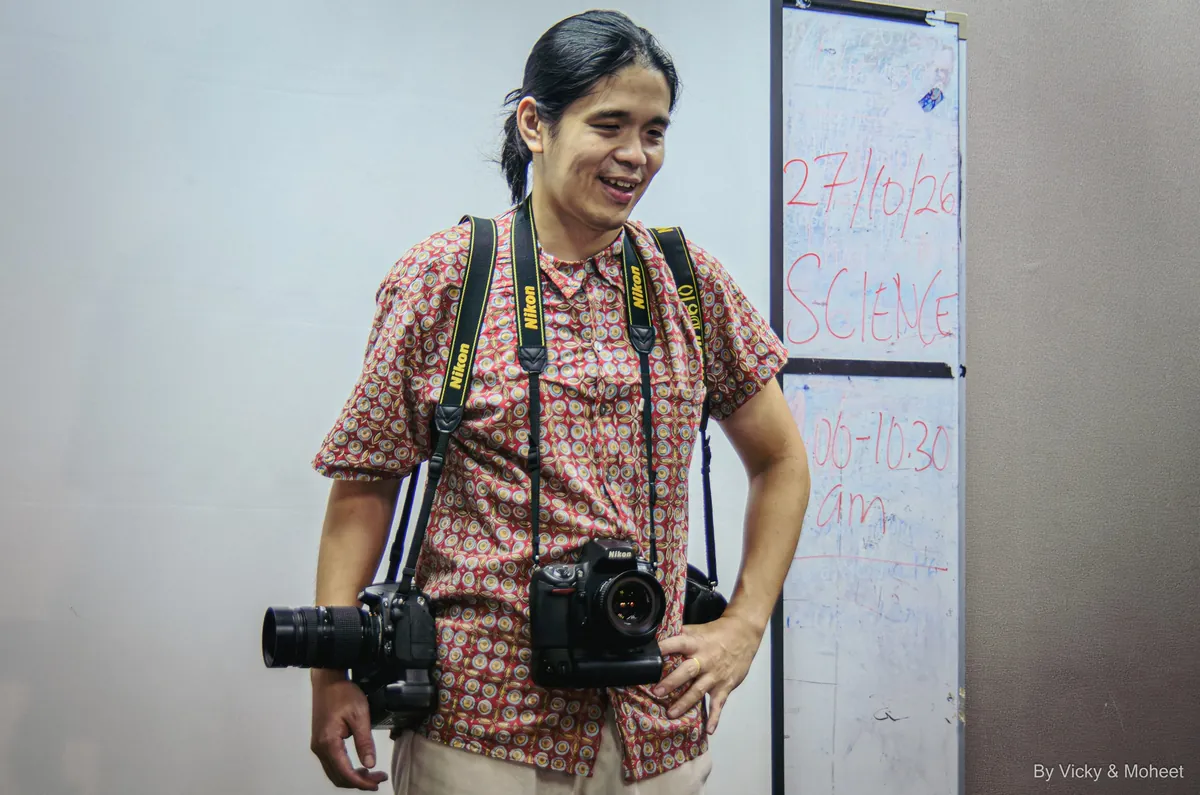
Nikon D5100 · Tamron 28–300mm f/3.5–6.3 at 70mm · f/5 · 1/80 s · ISO 500
What the cameras taught me
The cameras that made it easy showed me what a good photo looks like. The cameras that made it hard taught me how to make one. At Stellar, colleagues handed cameras to me. These days I'm the one handing them over, to the pupils in the school club I run. I tell them what the numbers mean on day one, because nobody told me. For one student, I wrote a 35-page beginner's course in Malay, Fotografi 101, before she ever held a camera.

Want photographs like these?